what inactive ingredients are not to be used by shellfish allergic patients
Considering food is not the merely thing people ingest on a regular basis, we accept paid a lot of attention to medications and the effect they tin have on food intake and trunk weight.
We often forget, though, that information technology is not but the active ingredients in medications that can accept an effect on our health, only that the then-chosen "excipients" can likewise have pronounced implications.
What are excipients?
Co-ordinate to Mahan and her co-authors (2011), excipients are added to the formulation of a medication to act as a buffer, a binder, a filler, a diluent, a disintegrant, a flavourant, colourant, preservative, suspending amanuensis or a coating. Such excipients are commonly called inactive ingredients, merely what many people forget, is that an excipient such as lactose, will affect a person who is lactose intolerant and cause him endure the same kind of side-effects he would develop after drinking a glass of milk.
Excipient categories
Excipients tin can also exist arranged according to ingredient categories and the issue they can have. For example, we can classify excipients according to the following categories:
a) Proteins
- Some medications comprise albumin which is produced from eggs and may cause allergic reactions in patients who are sensitive to egg poly peptide.
b) Alcohol or ethanol
- Booze is used equally a solvent and medications such as elixirs, syrups and liquid formulations tin contain considerable quantities of booze. Patients who are fond to alcohol or those taking other medications which touch on the nervous system (e.g. antidepressants, anxiolytics, sedatives, etc), should be warned that alcohol-containing drugs have the potential to cause additive effects. Anyone who is taking disulfiram to stop drinking, may develop unpleasant side-furnishings if they utilise another medication which contains alcohol as an excipient.
c) Artificial Sweeteners & Sugar Substitutes
- Aspartame
- Aspartame is used in medications as a not-nutritive sweetener, just because it is manufactured from 2 common amino acids chosen aspartic acid and phenylalanine, all medications containing aspartame must carry a alarm for patients suffering from phenylketonuria. These patients are born with a phenylalanine hydroxylase enzyme deficiency and tin therefore not metabolise the amino acid phenylalanine. If too much phenylalanine accumulates in the torso it can cause toxicity.
- Mannitol and Sorbitol
- Mannitol is the alcohol form of mannose (a sugar) and sorbitol that of sucrose. Mannitol and sorbitol are used as fillers and sweeteners respectively in a variety of medications. Both compounds tend to exist absorbed more than slowly and just contains 50% of the kilojoules per gram found in glucose. Mannitol and sorbitol are, however, inclined to produce soft stools and diarrhoea. Patients taking medications which comprise mannitol or sorbitol may develop diarrhoea non because the bodily medication is irritating their digestive system, but considering the excipients are having this outcome.
- Saccharine
- Saccharine is also a non-nutritive sweetener. Because saccharine was initially branded every bit 'carcinogenic' it has been extensively tested by the leading food and drug organisations such as the FDA in America, and according to Mahan and coauthors (2011), "Extensive human research has found no evidence of carcinogenicity."
d) Lactose
- A surprising number of medications contain added lactose as a filler. Because lactose sensitivity and intolerance are relatively common, particularly in countries such as South Africa, patients with a deficiency of lactase enzyme (the enzyme that digests milk carbohydrate or lactose), should always read the package inserts or patients data leaflets of any medications that are prescribed for them, to cheque if the medications contain lactose equally an excipient or not. If a person who is lactose sensitive or intolerant ingests lactose they may develop gastrointestinal distress, cramps, winds, nausea and diarrhoea.
e) Starches
- Starch derived from wheat, maize, or murphy is oftentimes added to medicines as a filler, a binder or a diluent. If patients suffering from wheat allergy or coeliac disease ingest a medication which contains wheat and thus as well gluten (a protein found in wheat, barley, rye and oats), this could lead to damage to the lining of the small intestine and a host of symptoms associated with this condition.
f) Sucrose or Sugar
- Patients suffering from diabetes or insulin resistance should exist made aware of the quantity of sugar included in medications because the saccharide tin interfere with their blood glucose levels. Some medications, including health products, list sugar content in terms of "bread portions" for the do good of diabetics.
g) Sulphites
- Sulphites are used as antioxidants in medications. These sulphur-containing compounds can crusade pronounced hypersensitivity reactions in patients with sulphur allergies, particularly asthmatics. Patients with a sulphur allergy need to be vigilant and bank check the ingredients lists of medications and health products for the presence of sulphur dioxide, sodium sulphite, and sodium and potassium bisulphite, to avoid severe, or fifty-fifty life-threatening reactions.
h) Tartrazine
- This yellow dye that is also listed as dye No. five, can cause severe allergic reactions in approx. one in 10 000 people. Most medications that comprise tartrazine carry a warning that this dye is present in the product, in similar fashion to foods.
i) Vegetable oil
- Diverse vegetable oils are used equally excipients in medications. Individuals with sensitivity or allergy to soy, sesame, cottonseed, maize or peanut oil should besides ever ask the chemist or prescribing doctor if any drugs or supplements that take been prescribed for them, contain the offending oils. An interesting case in indicate, is the fact that virtually of the vitamin E that is included in medications as an antioxidant or as the bodily vitamin, is produced from soy beans. For instance, the bulk of omega-3, -half-dozen and -9 supplements contain vitamin East as an antioxidant. Patients who are allergic to soy beans may therefore, develop allergic symptoms when using such omega fatty acid supplements or multivitamin supplements that contain vitamin E.
(Mahan et al 2011)
The bottom line
The bottom line is e'er to find out as much as possible most the medications you are using. Information technology is evident that it is non just the active ingredients in drugs and wellness products that may crusade bug and unpleasant side-furnishings. The so-chosen "inactive ingredients" or excipients are only as important if you happen to be sensitive to whatever given ingredients, such equally soy or wheat or sulphur or albumin, to name but a few.
If you lot are sensitive, intolerant or allergic to any chemical compound, ask your doctor and pharmacist (not but the shop assistant) if the medications and supplements you lot use contain ANY ingredient that may be harmful to your health. Also read the package insert and patient information leaflet and if yous find that a production has been dispensed to you without this data insist that you demand copies. The final responsibleness for your health rests with you, especially if yous need to be warning to subconscious allergens in foods and medications.
- (Dr IV van Heerden, DietDoc, March 2012)
(References: Mahan LK et al (2011). Krause'southward Food & the Diet Intendance Process. Ed. 13. Elsevier, USA.)
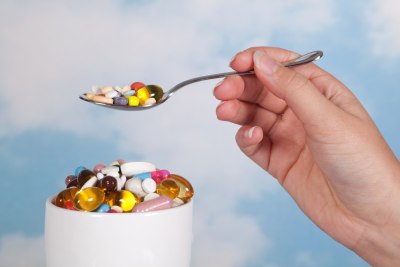
(Photo of spoonful of pills from Shutterstock)
Source: https://www.news24.com/health24/Medical/Meds-and-you/Using-medicines/Inactive-ingredients-in-meds-can-cause-side-effects-20120721
0 Response to "what inactive ingredients are not to be used by shellfish allergic patients"
Post a Comment